For years, Apple has pushed the boundaries of computational power, imaging, and materials science with its largest, most capable model. The provided conceptual feature overview of the “iPhone 17 Pro Max” presents a stunning vision of where this lineage could be headed, incorporating groundbreaking technologies that feel both futuristic and inevitable. This detailed examination will break down every conceptual feature shown, from the revolutionary camera stack to the refined build, and offer a guide to logical United States pricing for such a device.
1. The Design: Refined Grade 5 Titanium
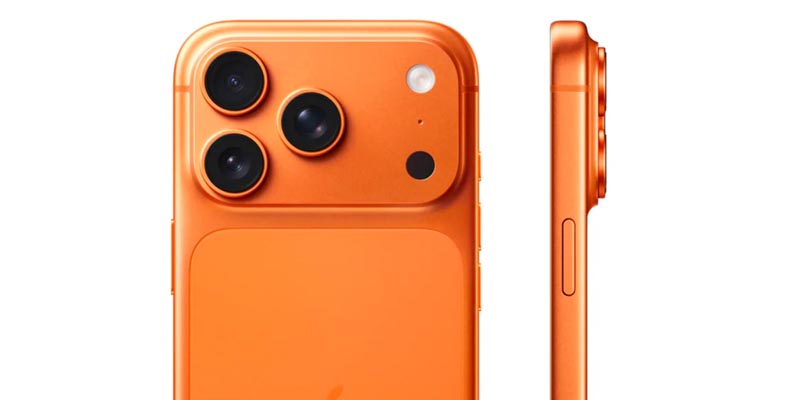
The foundation of any Pro Max is its construction, and this conceptual model doesn’t disappoint, showcasing a refined Grade 5 Titanium frame. Apple made a significant shift to titanium with the iPhone 15 Pro series, and this conceptually refined Grade 5 alloy suggests an even stronger, lighter, and more premium tactile experience. The image portrays a seamless metal structure with brushed and polished surfaces, indicating advanced manufacturing techniques. Grade 5 titanium is known for its excellent strength-to-weight ratio and corrosion resistance. A refined version would likely be even more robust, perhaps with new aerospace-grade treatments for increased durability and potentially a more sophisticated, durable finish. This is the model that feels incredible in the hand while being built to last a lifetime.
2. Computational Power: The 3nm A18 Bionic and Connectivity
At the heart of this conceptual powerhouse is the “A18 Bionic,” a conceptual chip built on an advanced 3nm process. This continues Apple’s tradition of leading the industry in mobile silicon. A 3nm chip would offer significant improvements in performance-per-watt over previous generations, resulting in not only a much faster phone for gaming, photography, and heavy multitasking but also one with substantially better battery life. This is the foundation that enables complex computational photography features and advanced AI-driven dynamic display technologies without draining the power.
Complementing this raw power are advanced connectivity standards: “5G ADVANCED” and “WI-FI 7.” 5G Advanced is the next evolution of 5G networks, promising even faster data speeds, lower latency, and better capacity, particularly for professional workflows and real-time AR/VR applications. Wi-Fi 7 is a massive leap forward for home and work networks, offering significantly more bandwidth and better multi-device handling, essential for an era of high-definition streaming and smart-home automation.
3. The Display: 6.7-inch Super Retina XDR with Advanced Dynamic Island
The conceptual overview highlights a massive 6.7-inch Super Retina XDR Display. This is a continuation of Apple’s current display technology, but with notable, forward-thinking enhancements. The panel is listed with a “2500 nits Peak,” indicating incredible brightness, making outdoor visibility flawless even in direct sunlight.
The most exciting development is the integration of an “Advanced Dynamic Island with Under-Display Sensors.” The image suggests a smaller, more discreet pill shape, made possible by moving several key Face ID and front camera sensors beneath the screen. This is the holy grail of smartphone design: a near-fullscreen experience that retains the critical authentication and selfie technology, all while making the user interface even more immersive. It is dynamic display technology at its finest, showing only what is needed, and hiding the rest.
Furthermore, the display is equipped with “PROMOTION” technology, offering a “1-120Hz ADAPTIVE REFRESH” rate. This means the screen dynamically adjusts its refresh rate from ultra-smooth 120Hz for scrolling to a static 1Hz for always-on displays, preserving battery life.
4. The Camera System: The Definitive Triple-Stack Array
The true star of the show is the rear camera system, a powerful, conceptually “All-New Triple-Stack Camera Array.” This is a definitive response to competitors who have prioritized higher megapixel counts and longer zoom ranges. Apple’s vision here is for an uncompromising, professional-grade solution across all focal lengths.
- Main 48MP: This lens (f/1.7, OIS) is the workhorse, likely featuring a massive sensor with advanced computational techniques to deliver exceptional low-light performance, incredibly detailed images, and natural depth of field. The large f/1.7 aperture lets in substantial light, and OIS ensures sharp shots even with handshake.
- Resolution 48MP with 5x Optical Zoom: This is a key conceptual component of the zoom system. It is a high-resolution, fixed-focal lens that works in concert with the main and periscope lenses, perhaps delivering stunning 5x results with near-lossless clarity by leveraging its full resolution and computational power before handing off to the mechanical periscope zoom.
- Ultra Wide 48MP: This f/2.2, 120° FOV lens ensures expansive landscapes, architectural shots, and group photos are captured without compromise, maintaining the same high-resolution quality as the main and zoom lenses.
- The Periscope Marvel (Conceptual): The center jewel is a “5X OPTICAL 48MP PERISCOPE TELEPHOTO ZOOM (Conceptual).” While competitors have periscope lenses, the application of a high-resolution 48MP sensor in a periscope design with a high aperture for zoom is a significant conceptual hurdle. This suggests Apple would use a large sensor and complex mirror array to achieve sharp, stable 5x zoom with a quality that rivals its main lenses, all within the phone’s thin body.
This all-new triple-stack array isn’t just about focal lengths; it’s about creating a unified, high-resolution system where all lenses work together, allowing for seamless transition and incredible computational enhancements like “Super Resolution Zoom” (Conceptual).
5. Power and Charging: A Day-Long Battery and 40W Charging
All of this technology needs robust power, and the conceptual overview lists a “5000mAh Conceptual Battery” with a promise of “ALL-DAY BATTERY LIFE (5000mAh Conceptual).” This capacity, combined with the extreme efficiency of the 3nm A18 chip, would provide unmatched endurance. To keep this massive cell powered, the move to “USB-C | 40W WIRED CHARGING” is a logical and long-awaited upgrade, allowing for faster top-offs during busy days.
The Price Tag: A Guide to Conceptual USA Pricing
Understanding the potential cost of such a future flagship is just as important as knowing its features. This is where we transition from a vision to a logical marketplace projection.
A “Vision Pro Max” model with this suite of advanced features and premium materials cannot simply start at the standard price. The “Grade 5 Refined Titanium,” the intricate “Advanced Dynamic Island with Under-Display Sensors,” and the expensive complexity of a “48MP Periscope Telephoto” camera will all push the price tag higher. It is essential to remember that this entire piece is a conceptual overview, and the pricing below is a logical projection based on Apple’s premium positioning and recent market trends.
With the current iPhone Pro Max models starting around $1199, a logical starting price for this future, feature-packed iPhone 17 Pro Max with this level of innovation would be closer to $1,399 or $1,499 for the entry-level model, which would likely start at a higher base storage tier (e.g., 256GB or even 512GB to support 48MP photos) to justify the increase.
Here is a guide to the conceptual pricing tiers for the United States:
iPhone 17 Pro Max (Conceptual Pricing Tiers)
- 512GB (Base Tier – Conceptual): $1,499.99 (USD)
- 1TB (Pro Tier – Conceptual): $1,749.99 (USD)
- 2TB (Vision Tier – Conceptual): $1,999.99 (USD)
A new 2TB tier would be a plausible introduction for a device with such massive photography capabilities. A $200-$250 price jump between these high-capacity tiers is standard, given the premium nature of NVM storage and the target demographic. This is a phone designed for users who create significant, high-resolution content, and its pricing must reflect that professional utility. It is an investment in unparalleled future-ready technology, a true flagship vision for a truly ultra-premium price.